September 2, 2026
#31 Financial Inclusion as Land Control: Debt, Weather Insurance, and Precarity in Guatemalan Agriculture
Finance capital’s expansion into farming has often been reduced to institutional investments in agriculture that target large-scale farming and other capital-intensive operations along the agricultural commodity chain. Geographer Ryan Isakson expands this narrow framing by illustrating how finance capital also seeks to expand and extract value from peasant farmers through financial inclusion schemes, and how this can likewise weaken their control over farmland, even if they retain property rights over it. Redistributive credit-debt relations are at the core of this conundrum.
***
Financial inclusion has emerged as one of the most prominent development paradigms of the 21st century. According to proponents, the practice of including poor and marginalized populations that were previously excluded from the formal financial sector into markets for financial services like credit, savings, and insurance is key to catalyzing a host of pro-poor benefits, including improved incomes, greater resilience, and socio-economic empowerment [1]; [2]. Carrying this mantle, a host of prominent development organizations like the Gates Foundation, the World Bank, and the United Nations Development Programme (UNDP), among many others, have promoted financial inclusion initiatives throughout the world, fueling a dramatic growth in the share of adults participating in the global financial sector over the past two decades [3]; [4].
Despite widespread support, research suggests that the purported benefits of financial inclusion are often overstated. Including previously unbanked populations in the formal banking sector can, in fact, have perverse consequences that compromise the wellbeing of those most in need [5]; [6]; [7]. In agrarian contexts, for instance, an emerging literature illustrates how the expansion of credit markets can contribute to over-indebtedness and the loss of land among poor agricultural households [8]; [9]. But the adverse impacts of financial inclusion upon agricultural producers’ land rights need not entail their outright dispossession. As I illustrate in this contribution, the expansion of financial markets can also serve to weaken farmers’ control over their farmland even when they retain property rights. Specifically, drawing upon the experiences of small-scale farmers in Guatemala’s horticultural export sector, I argue that financial inclusion enables banks and other commercial actors to exercise indirect control over farmland. To do so, I focus upon two forms of financial inclusion. First, I show how the incorporation of peasant populations into formal credit markets compels their cultivation of horticultural export crops and is complicit in their growing vulnerability to economic and environmental stressors. Second, I describe how the recent introduction of agricultural microinsurance facilitates the continuation of credit-debt relations, thereby ensuring banks’ and other commercial actors’ continued ability to profit from the cultivation of export-oriented fruits and vegetables despite the increasing precarity of agricultural producers. In general, this contribution is a call to also center credit as a fuel of agrarian inequalities and dispossession, not just (direct) equity, as done in much of the land grab debate.
Immiserizing Growth in Guatemala’s Horticultural Export Sector
Despite its relatively small size, the Central American country of Guatemala is widely recognized as a global leader in the export of fresh fruits and vegetables. It is a major supplier of much of the fresh produce found on the shelves of northern supermarkets, especially during winter months, including peas, green beans, melons, papayas, fresh-cut flowers, broccoli, and blackberries [10]; [11]. A significant share of these crops are cultivated in Guatemala’s central highlands by Indigenous Mayan ‘peasant’ farmers who are known in Spanish as campesinos [12]; [13].
Guatemala’s horticultural export sector has grown rapidly since its founding in the 1980s. According to available FAO data, the value of the country’s horticultural exports ballooned from US$25 million in 1993 to US$478 million in 2022, or more than 1800% in less than three decades [10] (FAOSTAT, 2026). Initially, the growth of the sector was mirrored in improved economic conditions for participating campesinos, including greater incomes and higher quality housing and diets [14]; [15]. As the sector has grown, however, the benefits for farmers have slowly eroded. Many have experienced shrinking prices for their produce, higher input costs, and worsening environmental conditions, including greater exposure to pests, crop disease, and erratic weather [16]. These dynamics can be understood as a process of ‘immiserizing growth’: even as the sector is booming and generating substantial profits, many of the campesinos who cultivate the crops suffer from mounting debts and increasing vulnerability to a growing array of environmental threats. Why then, do they continue to allocate their land to the cultivation of peas, green beans, blackberries, and other export crops? In part, the answer lies in the financial origins of the horticultural sector in Guatemala.
Debt and Development: “The Switch to Market Crops Generates a Strong Demand for Credit”
Like much of the Majority World, the Guatemalan economy was heavily burdened by external debt in the 1970s and ‘80s. The country was also in the midst of a bloody civil war, which many have characterized as a campaign of state-sponsored genocide against rural and Indigenous populations, particularly in the highlands. To address both problems, the US government proposed the seemingly orthogonal solution of horticultural export crops. By transitioning campesinos from the cultivation of maize, beans, and other crops for subsistence purposes to crops like broccoli, cauliflower, and strawberries for export markets, the logic was that Guatemala could generate new foreign exchange that would enable the country to pay its foreign debts. Additionally, proponents reasoned, the transition to export crops would boost the agricultural incomes of subordinate Indigenous peasants, thereby addressing the socioeconomic poverty and inequality that was at the root of the country’s civil war.
At the outset, most Guatemalan campesinos were not interested in cultivating fruits and vegetables that they had never heard of, even if agricultural extension agents insisted it was in their best interest to do so [17]. The formation of new credit-debt relations provided additional persuasion. A review of relevant reports from the U.S. Agency for International Development (USAID) documents how debt was deliberately harnessed to alter campesinos’ land use practices in the early years of the horticultural campaign. To ensure that the non-native crops received sufficient water to achieve export quality standards, for instance, USAID encouraged the construction of irrigation projects for organized groups of small-scale farmers. While some costs of the irrigation systems were subsidized, participating farmers were responsible for paying for the majority of expenses via targeted loans from Guatemala’s National Bank of Agricultural Development, or BANDESA. “Instead of waiting for [the campesinos] to identify their own potential water sources and voluntarily seek assistance,” one project evaluator wrote, “pressure was exerted to organize and ‘push’ farmers onto the projects.” He went on to write that once farmers were roped into the self-financed irrigation systems, the “repayment burden” of the associated loans worked to compel many farmers to adopt the cultivation of high value commercial crops like vegetables, strawberries, and flowers [18]. Another USAID report stated that, “Irrigation not only permits, but demands crop diversification and commercial orientation. The switch to market crops induced by irrigation also generates a strong demand for credit” [19]. That is, once farmers were pushed into the irrigation systems, the associated debts functioned as a form of indirect land control, compelling borrowers to cultivate cash crops. The cultivation of cash crops, in turn, required that the farmers borrow even more in order to purchase agrichemicals and other inputs necessary to sustain the delicate plants, further weakening their autonomy over land use decisions.
The symbiotic relationship between the development of Guatemala’s horticultural export sector and the inclusion of highland campesinos in formal credit markets was reinforced through US food aid agreements in the 1980s and ‘90s. A systematic review of the conditions included in the agreements points to a targeted campaign to expand the cultivation fresh fruits and vegetables in the Guatemalan highlands, often linking them through reforms at the aforementioned national agricultural development bank, BANDESA [20]. In the 1980s, agreements stipulated for the formation of specific funds within the bank to finance targeted at farmers engaged in commercial fruit and vegetable production, including funds for associated irrigation systems. As the sector grew, however, in the 1990s the food aid agreements increasingly called for the decentralization and increased profit-orientation at the bank. In 1996, BANDESA was partially privatised and changed its name to the Bank for Rural Development, or BANRURAL. Under its new mandate, BANRURAL raised its interest rates and began a massive expansion drive in the rural reaches of Guatemala, dramatically increasing its lending to poor and Indigenous farmers [21]. This drive was particularly intense in the central highlands, the epicenter of the horticultural export sector, where BANRURAL now accounts for more than one-quarter of commercial bank agencies [22].
Over time, the links between horticultural export farming and agricultural credit have become tightly entangled in a Gordian knot in the central highlands of Guatemala. As the cultivation of fresh fruits and vegetables has grown, so too has the expansion of financial actors servicing poor and small-scale farmers. Within the first eight years of its restructuring, BANRURAL’s lending to the agricultural sector increased more than five-fold while the number of loans it generates increased more than 12-fold, suggesting a growing clientele of smallholder farmers [23]. On top of this, The neoliberal restructuring the country’s financial sector and the government’s embrace of the financial inclusion mandate have facilitated the entry and growth of a host of private commercial banks, microfinance institutions, and credit unions, many of them offering financial products specifically geared towards commercial farmers. Billboards promoting agricultural credit line the highway that cuts through the central highlands and within the villages utility posts are plastered with posters offering loans for the purchase of agricultural inputs.
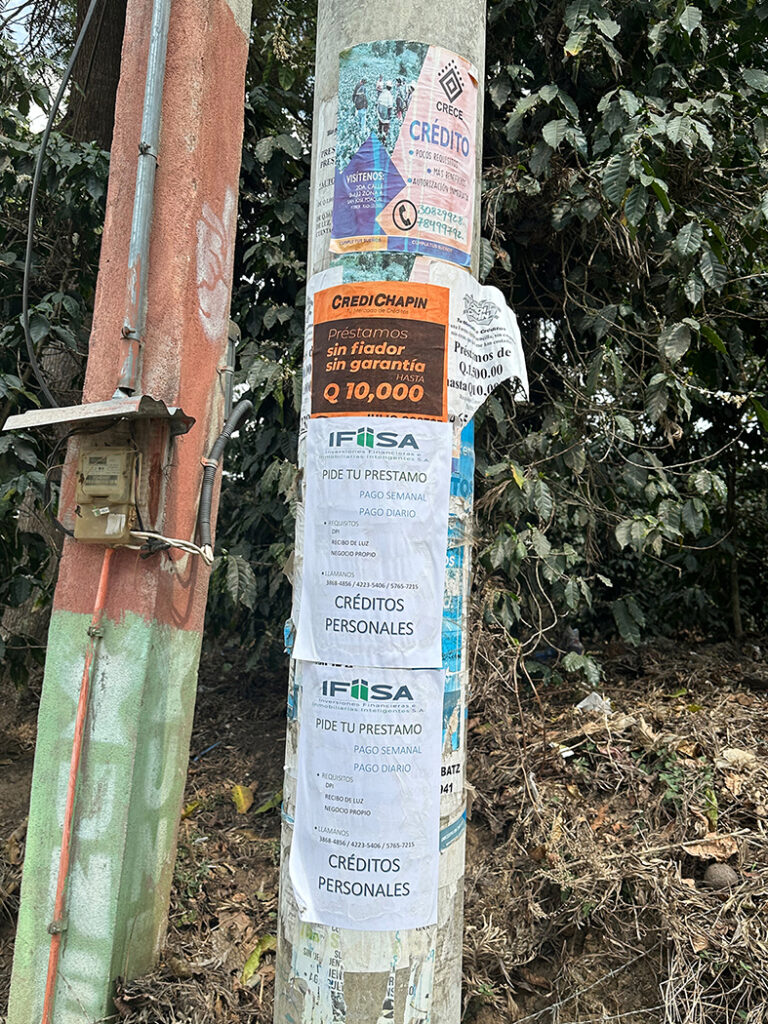
Figure 1: The photo shows a picture of a pole in a highland village in Guatemala.
The pole is plastered with offers for credit for farmers. Source: The author.
“How We Repay the Bank is Somewhat Complicated”
The growth of the financial sector in Guatemala’s central highlands is as much evident on the demand side as the supply side. In a 2019 survey of agricultural producers in the highland department of Chimaltenango, my colleagues and I found that nearly two-thirds of fruit and vegetable farmers had recently obtained at least one loan from a formal lender, suggesting a high degree of financial inclusion among a population that is often characterized as insufficiently banked [24]. Horticultural farmers in the region have long depended upon credit as a means to access the large quantities of agrichemicals and other inputs that are necessary to cultivate export-quality fruits and vegetables. Some banks even required borrowers to apply excessive agrichemicals as a means of ensuring that their products met the cosmetic expectations of northern consumers and, hence, farmers’ ability to repay their loans [25].
However, many of the participants in our study explained that their dependence upon credit has intensified in recent years due to the confluence of economic and environmental pressures. They described weakening demand and falling prices for their produce even as the costs of inputs, especially synthetic fertilizers, have increased significantly. Compounding this ‘price-cost squeeze’, they described worsening environmental conditions. Over time, pests and pathogens have become more resistant to agrichemicals, becoming a major threat to the non-native horticultural export crops. Climatic stresses have also intensified. Farmers told us about the increased frequency of hailstorms and more erratic rainfall patterns, especially a general trend of aridification that is interspersed with intense downpours. Faced with shrinking profits and growing crop losses, many horticultural farmers told us that they are taking out more loans in order to sustain their families and livelihoods. Yet, as one vegetable farmer explained, even as they take out more loans, their ability to repay them is complicated by climatic stresses:
With agriculture, instead of improving our income or profits, we are becoming indebted. That is why we have been taking credit from the banks, just to sustain ourselves. And after our crops grow, we return the money to the bank. We have nothing left. Now we realize that the interest is increasing and the cold is killing our crops. How we repay the loan at the bank is somewhat complicated.
Indeed, many campesinos described heightened pain from the double-edged sword of credit-debt. Roughly three-quarters of the horticultural export farmers in our survey reported significant levels of stress associated with repaying their loans. Yet with few livelihood alternatives, their only hope of repaying their debts is to intensify their cultivation of commercial crops. Some alternate the export crops that they cultivate – for example, from cauliflower to green beans or snow peas to blackberries – with the hope of capturing price upswings amid market fluctuations. Others have doubled down on horticulture by converting land that they had previously reserved for subsistence crops and, hence a secure food source, to cash crops. Whatever the case, debt disciplines how campesinos engage with their farmland, compelling them to cultivate cash crops even as their continued ability to do so is impeded by shrinking profits, mounting debts, and growing vulnerability to environmental threats.
Insuring Financial Profits
Growing economic and environmental stresses not only imperil the livelihoods of horticultural growers. They also threaten the profits of the various businesses linked to the sector, including input suppliers, buyers, processors, exporters, retailers, and, indeed, credit providers. This risk is not lost on lenders. As the number of agricultural producers defaulting on their loans has increased in recent years [26]; [27], some lenders have expanded the menu of financial services that they offer to include weather microinsurance. BANRURAL, the most prominent source of credit for horticultural farmers, has been at the vanguard of this development.
In 2017, BANRURAL began offering farmers who participate in its microentrepreneur lending program the option to purchase a novel type of protection known as index-based insurance (IBI). Unlike conventional agricultural insurance policies that indemnify farmers based upon the actual value of losses in their fields, compensations in IBI policies are indexed to environmental measures that are correlated with agricultural production. The insurance offered by BANRURAL is indexed to three types of risk: drought, excessive rainfall, and earthquakes. If, for instance, the amount of rain that falls over a three-day period exceeds the historical average of that area by a predetermined amount, a payment is triggered. The more rain that falls above that trigger point, the greater the payment to policyholders until a specified maximum is reached. Similarly, indicators of drought are indexed to the historical average rainfall for a particular grid on the map while earthquakes are indexed to the Richter scale. The more severe the event, the greater the insurance payout. Proponents argue that using indices rather than claims assessors to estimate losses significantly lowers the cost of providing insurance, especially to small-scale farmers operating in remote regions [28]. This practice makes IBI a cost-effective means to provide the financial service to poor people who would otherwise be excluded from conventional insurance markets [29].
While the introduction of IBI in Guatemala has facilitated the inclusion of campesinos in financial markets, its contributions to their security are questionable. As my colleagues and I detail in our forthcoming paper, most policyholders in Guatemala have been disappointed with BANRURAL’s IBI initiative. The reasons are three-fold. First, they are frustrated by the limited number of risks covered by the insurance. To be sure, drought and excessive rainfall are widely recognized threats, but they are not the only ones. As noted earlier, horticultural production is also negatively impacted by pests, plant disease, and other forms of severe weather like extreme temperatures, hail, and wind. Meanwhile, few study participants identified earthquakes as a threat to their livelihoods. It seems that the IBI policy is biased towards risks that can be easily measured, but ignores those that are more difficult to index. Second, famers have been frustrated by the practice of basing payouts upon measures of environmental events rather than what is actually happening in their fields. Indeed, a common problem with IBI is that policyholders might suffer losses from risks that are yet still not receive a payment. This mismatch could be spatial: weather can be quite varied across space, particularly in a landscape as dramatic as the Guatemalan highlands, meaning that the rainfall measure for a given grid square is not necessarily reflective of the actual rain that falls upon a particular plot within that square. The mismatch can also be temporal: an index that measures extreme rainfall across three-day periods may average-out the short but intensive bursts of rain that can punctuate a general state of drought and cause significant damage to a farmers’ field. Due to these inconsistencies, more than a quarter of IBI policyholders reported suffering crop losses from insured risks, yet not receiving a payment. Finally, IBI is a type of microinsurance, meaning that payouts can be quite small. Many farmers were disappointed, if not insulted, by the paltry compensation that they received through their IBI policies.
While IBI provides limited protections to agricultural producers, the insurance is still beneficial to BANRURAL. In interviews, loan officers told my colleagues and I that they believed the bank introduced the insurance as a means of protecting itself the growing challenge of farmers defaulting on their loans amidst market difficulties and growing climatic risks. The concerns of the bank are reflected in the specific design of the IBI. While BANRURAL receives some 25 percent of the premiums that policyholders pay for the insurance, it offloads 100 percent of the risk of making payouts to those policyholders to the transnational reinsurance giant, Swiss Re [30]. That is, when an environmental event triggers payouts on IBI policies, the payouts come from Swiss Re, not BANRURAL. Nonetheless, those payouts are channeled through BANRURAL. The bank has structured IBI insurance policies so that any payouts first go towards paying off any loans that policyholders have with the bank. They are only eligible for a direct payment once their loans from BANRURAL have been paid off. BANRURAL’s priorities are clear. While extreme weather may create numerous challenges for campesino farmers trying to support their families, the bank is primarily concerned that they do not default on their loans amidst such hardships. IBI insures the bank’s loans; policyholders rarely have a choice over how payouts are utilized. Even while IBI provides individual policyholders with minimal security, BANRURAL can be assured that there will not be widespread defaults when environmental hazards strike.
Conclusion
BANRURAL’s introduction of IBI has helped to prop-up an increasingly fragile horticultural export sector in Guatemala. By ensuring that lending to vulnerable campesinos remains profitable, the insurance entrenches the cycle of debt that has long circumscribed agricultural producers’ land use practices. The persistence of debt translates into the persistent need to cultivate fruits and vegetables for market actors. The continuation of horticultural agriculture, in turn, means that agricultural producers will continue generating profits for commercial actors: purchasing agrichemicals and other inputs from suppliers; cultivating produce for buyers, processors, and exporters; and, of course, paying interest on loans from BANRURAL and other creditors. Moreover, BANRURAL also claims a share of the premiums that customers pay for their insurance policies. While the inclusion of campesinos in credit markets limits their control over their farmland, compelling their ongoing cultivation of horticultural export crops, index-based insurance facilitates the continuation of that condition despite the threats posed by worsening economic and environmental conditions.
While development practitioners continue to promote financial inclusion as a development panacea, this study serves as a cautionary tale. In the horticultural export sector of the Guatemalan highlands, the inclusion of Indigenous campesinos in financial markets has done more to perpetuate their subordination than liberate and empower them. In more general terms, it seems that the development of financial relations within a socio-economically stratified landscape, does more to accentuate inequalities than smooth them. This should not come as a surprise since debt rarely, if ever, provides a pathway for development.
[1] World Bank (2013) World Development Report 2014: Risk and Opportunity: Managing Risk for Development. Oxford: Oxford University Press.

[2] Gates Foundation (n.d.) Financial Inclusion. Available at: https://www.gatesfoundation.org/our-work/programs/global-growth-and-opportunity/inclusive-financial-systems (accessed 15 June 2026).

[3] World Bank (2025) The Little Data Book on Financial Inclusion 2025. Washington, DC: World Bank.

[4] United Nations Development Programme (UNDP) (2025) Next Practices: A Digital Financial Inclusion R&D Agenda,  15 April 2025).

[5] Duvendack M and Mader P (2020) Impact of Financial Inclusion in Low‐and Middle‐Income Countries: A Systematic Review of Reviews. Journal of Economic Surveys 34(3): 594-629. DOI: 10.4073/csr.2019.2.

[6] Paprocki K (2016) ‘Selling Our Own Skin’: Social Dispossession Through Microcredit in Rural Bangladesh. Geoforum 74: 29-38. DOI: 10.1016/j.geoforum.2016.05.008.

[7] Taylor M (2011) ‘Freedom From Poverty is not for Free’: Rural Development and the Microfinance Crisis in Andhra Pradesh, India. Journal of Agrarian Change 11(4): 484-504. DOI: 10.1111/j.1471-0366.2011.00330.x.

[8] Green WN and Bylander M (2021) The Exclusionary Power of Microfinance: Over-Indebtedness and Land Dispossession in Cambodia. Sociology of Development 7(2): 202-229. DOI: 10.1525/sod.2021.7.2.202.

[9] Borras SM Jr, Arango L, Belay M, Franco JC, Kham SS, Moreda T, Ra D, Rojas Herrera I, Wang C, Ye J and Xu Y (2025) Death of Agrarian Societies by a Thousand Cuts: Non-Corporate ‘Pin Prick’ and Medium-Scale Land Grabs. Globalizations 22(8): 1672-1686. DOI: 10.1080/14747731.2025.2526296.

[10] FAOSTAT (2026) Crops and Livestock Products. Available at: https://www.fao.org/faostat/en/#data/TCL (accessed 24 May 2026).

[11] Tridge (no date) Fresh Blackberry. HS Code 081020. Export Data. Available at: https://www.tridge.com/intelligences/blackberry/export. (accessed 15 June 2026).

[12] Instituto Nacional Estadística (INE) (2004) IV Censo Nacional Agropecuario. Guatemala: República de Guatemala, Ministerio de Agricultura, Ganadería, y Alimentación.

[13] World Bank (2023) Creando Mercados en Guatemala: Liberando el Potencial del Sector Privado para Lograr un Crecimiento y un Desarrollo Económico Eostenibles e Inclusivos. Washington, DC: International Finance Corporation.

[14] Hamilton S and Fischer EF (2005) Maya Farmers and Export Agriculture in Highland Guatemala: Implications for Development and Labor Relations. Latin American Perspectives 32(5): 33-58. DOI: 10.1177/0094582X05279503.

[15] Carletto C, Kilic T and Kirk A (2011) Nontraditional Crops, Traditional Constraints: The Long‐Term Welfare Impacts of Export Crop Adoption Among Guatemalan Smallholders. Agricultural Economics 42(1): 61-76. DOI:.1111/j.1574-0862.2011.00552.x.

[16] Isakson SR (2026) Cultivating Climate Precarity: Mechanisms of Surplus Capture and Immiserizing Growth in Guatemala's Horticultural Export Sector. Journal of Agrarian Change 26(1): 1-17. DOI: 10.1111/joac.70037.

[17] Fischer EF and Benson P (2006) Broccoli and Desire: Global Connections and Maya Struggles in Postwar Guatemala. Stanford: Stanford University Press.

[18] Lebaron AD (1994) Profitable Small-Scale Sprinkle Irrigation in Guatemala. Irrigation and Drainage Systems 8(1): 13-23. DOI: 10.1007/BF00880795.

[19] United States Agency for International Development (USAID) (1989) Irrigation Sector Assessment: Guatemala. Office of Rural Development Report No. 30. September 1989.

[20] Garst R (1992) Trigo a Cambio de Que? El Programa PL480 Titulo I en Guatemala. Debate No. 13. Facultad Latinoamericana de Ciencias Sociales (FLACSO), Guatemala City: Serviprensa Centroamericana.

[21] Afaro AL and Afaro LI (2010) Banrural S.A. INCAE Business Review 1(10): 1-12.

[22] Superintendencia de Bancos Guatemala, C.A. (SIB) (2023) Boletín Trimestral de Indicadores de Inclusion Financiera. Septiembre 2023, Año 10, No. 4.

[23] Trivelli C and Piselli R (2007) Banrural S.A.: Razones para Celebrar Diez Años de un Banco Distinto. In: Instituciones Públicas y el Desarrollo de los Mercados Financieros Rurales: Lecciones Desde las Experiencias en Curso en América Latina. Lima: Instituto de Estudios Peruanos.

[24] Isakson SR, Posada A and Velez-Villegas JM (forthcoming) The De(bt)velopment of Climate Vulnerability: Weather Microinsurance, Debt, and Agrarian Change in the Guatemalan Highlands (Working Title).

[25] Thrupp LA (1990) Inappropriate Incentives for Pesticide Use: Agricultural Credit Requirements in Developing Countries. Agriculture and Human Values 7: 62-69. DOI: 10.1007/BF01557311.

[26] Stoll D (2010) From Wage Migration to Debt Migration? Easy Credit, Failure in El Norte, and Foreclosure in a Bubble Economy of the Western Guatemalan Highlands. Latin American Perspectives 37(1): 123-142. DOI: 10.1177/0094582X09355430.

[27] Johnson RL and Woodhouse M (2018) Securing the Return: How Enhanced US Border Enforcement Fuels Cycles of Debt Migration. Antipode 50(4): 976-996. DOI: 10.1111/anti.12386.

[28] Skees JR and Collier B (2008) The Potential of Weather Index Insurance for Spurring a Green Revolution in Africa. Lexington, KY: Global AgRisk Inc. Available at: https://hdl.handle.net/10568/934.

[29] World Bank (2011) Weather Index Insurance for Agriculture: Guidance for Development Practitioners. Agriculture and Rural Development Discussion Paper No. 66274. Washington, DC: World Bank.

[30] Biese K, McCord MJ and Gopalakrishna I (2022) Making Climate Risk Microinsurance Work: Case Study MiCRO & Aseguradora Rural (AR), Guatemala. Milliman Research Report. Microinsurance Centre at Milliman.